
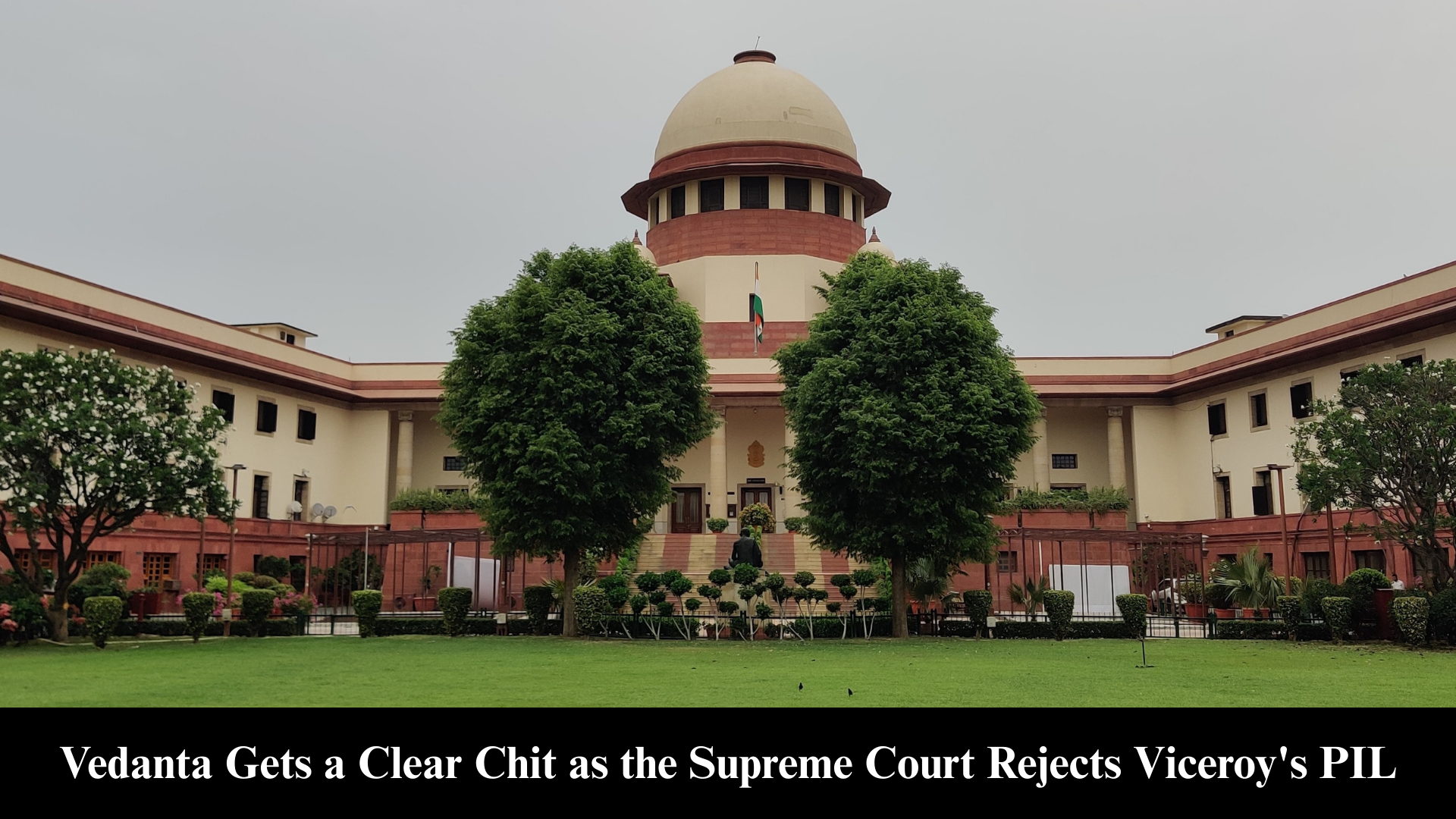
In a significant development, the Supreme Court of India declined to entertain a Public Interest Litigation (PIL) seeking a probe based on allegations raised by Viceroy Research against Vedanta Limited, Hindustan Zinc, and related entities.
For a pioneer company like Vedanta, which is strongly focused on contributing to the Indian government’s ‘Atmanirbhar Bharat’ (self-reliant India) initiative, this decision is more than just a legal win. It highlights the company’s governance structure and transparency.
Vedanta’s Transparency Amid Short-Seller Noise
Though short-selling firms like Viceroy often publish such baseless allegations against prestigious companies, mainly to create panic in the market. But in the matter of Vedanta Supreme Court, the Indian judiciary stepped in and gave the final verdict in favour of Vedanta. By refusing to entertain the PIL, the Supreme Court has clearly highlighted that the Viceroy’s claims are baseless and thus will not be accepted at any cost. A Bench consisting of Justices P.S. Narasimha and A.S. Chandurkar stated that they were not inclined to hear the PIL, leading petitioner Shakti Bhatia to withdraw the plea.
This is significant because it isn’t just a procedural dismissal — the court has questioned the very influence of external entities on domestic markets. By rejecting the PIL, the Court has set a critical example among short seller companies— Indian companies cannot be subjected to unfettered external pressure, especially when the legal battle is fought without facts and ethical standards.
Such a stand reinforces faith in India’s regulatory and judicial institutions, rather than allowing external financial actors to shape the narrative unilaterally.
Vedanta Takes Legal Opinion from Former CJI
Vedanta not only denied the baseless claims related to the Vedanta scam, but also got legal support and opinion from former Chief Justice of India, D.Y. Chandrachud, who clearly rejected the key allegations made by Viceroy. He further mentioned the weakness in the short-seller’s arguments and backed Vedanta for being a legitimate company.
This is a significant development for Vedanta. The legal opinion from a former CJI further strengthens Vedanta’s reputation not just in the global market but among its employees, stakeholders, and government.
Vedanta Receives Long-Term Stakeholder Confidence
Besides, the Supreme Court and former CJI, who continued trusting Vedanta, many investors, including reputed global institutions, have also expressed confidence in Vedanta’s fundamentals. The major brokerages like JP Morgan are also suggesting stakeholders not to get worried by the Viceroy allegations, underlining their belief in Vedanta’s long-term strength.
With the Supreme Court’s refusal to probe further, that institutional trust gains even more weight.
Why This Matters — Beyond Legal Victory
Reputation Recovery: In the digital era, short-seller allegations have the potential to bring down the stock price (and the public perception) of a company (sometimes). However, in the case of Vedanta, the ruling of the SC on the Vedanta Supreme Court matter brings relief.
Governance Credibility: By commissioning independent legal review and managing allegations head-on, Vedanta shows it’s serious about accountability.
For Demerger: PIL rejection by the Supreme Court will allow Vedanta to focus on its long-term business plan, including a proposed demerger and debt structure. After getting a clean chit in this matter, Vedanta will move ahead with corporate restructuring, which includes creating five, pure-play, sector-focused companies.
Market Stability: The development in this matter sends a strong message in the market. Indian firms will not be shaken by the speculative external pressure, especially when it lacks significant evidence.
Conclusion
The Supreme Court refusal to listen to the Viceroy-based PIL is much more than a legal win for the company. Rather, the verdict of – Vedanta Supreme Court builds confidence. Combined with a legal opinion of a former CJI and trust from global organisations, Vedanta is now better placed, both in the courts and in the market.
Though external voices sometimes grow louder, Vedanta’s calmness and dedication, backed by the support of its global investors, have helped the company move ahead with its legacy. This matter is not about proving critics or short seller firms wrong; rather, it’s about respecting the legal process, ensuring transparency, and patiently building value.
In this episode, Vedanta hasn’t just survived — it’s reasserted its legitimacy.